
Spanish Computing Community Shines in Thailand at CHEP 2026
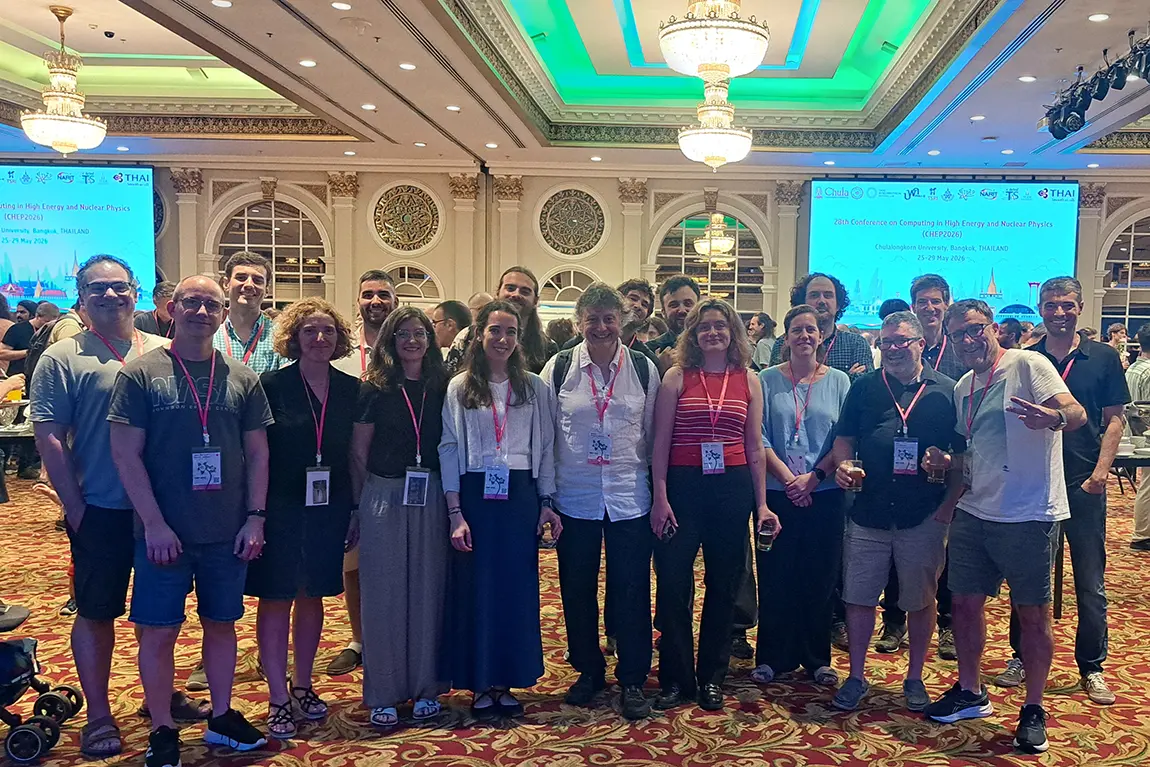
An outstanding presence of the Spanish researchers at CHEP 2026 highlighted the growing international impact of the national scientific-computing community.
1st June 2026 | Arantza Oyanguren and Carla Marín.
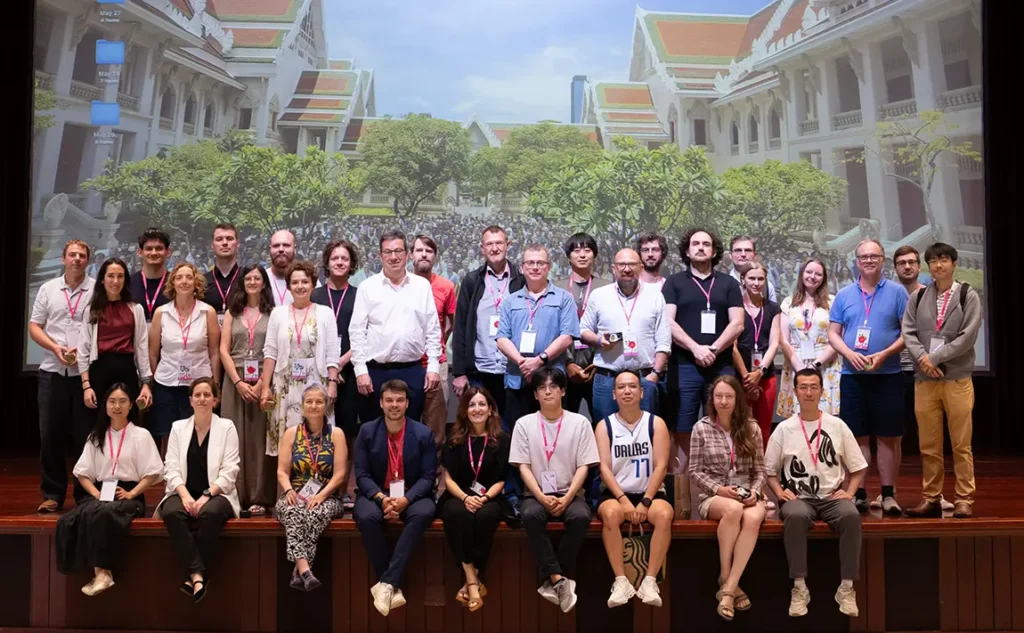
The 2026 edition of the International Conference on Computing in High Energy and Nuclear Physics (CHEP), held in Thailand, provided a remarkable showcase of the strength and maturity of the Spanish scientific-computing community. More than 50 researchers, software developers and computing experts from the Spanish circle made an outstanding contribution to the conference programme, presenting innovative developments across a broad range of topics and playing a visible role in shaping discussions on the future of computing for large-scale scientific experiments.
“It looks like a Spanish show!” humorously remarked Eduardo Rodrigues (University of Liverpool), coordinator of the HEP Software Foundation (HSF), the international organization that promotes collaboration and common efforts in software and computing for High Energy Physics.
And he was not joking. With Hugo González Labrador (CERN) serving on the Programme Committee, and Marta Bertrán Ferrer (CERN), Carla Marín Benito (University of Barcelona), Antonio Pérez-Calero Yzquierdo (PIC), Arantza Oyanguren Campos (University of Valencia), and Emma Torró Pastor (IFIC, Valencia) acting as Track Conveners, the final plenary session summarizing the conference contributions had a distinct and unmistakably Spanish flavour.
Among the many topics discussed throughout the conference, Artificial Intelligence emerged as one of the most transformative and widely debated themes. Beyond the growing adoption of machine-learning techniques in triggering, reconstruction, simulation and analysis workflows, special attention was given to the rapid rise of Large Language Models (LLMs) and their potential impact on the way physicists develop software, interact with computing infrastructures, analyse data and communicate scientific results. The importance of these developments was reflected in a dedicated panel discussion, “Opportunities and Responsibilities for Using AI in Particle Physics”, which brought together experts from different areas of the community to discuss not only the opportunities offered by AI, but also the challenges related to reliability, reproducibility, transparency and responsible use.
Another prominent topic throughout the conference was the evolution of Analysis Facilities, which are rapidly becoming a new paradigm for data analysis in High Energy Physics. Several contributions presented the latest developments in integrating interactive analysis environments, distributed computing resources, data management systems and modern software tools into coherent platforms capable of supporting the demanding workflows of the HL-LHC era. These facilities promise to simplify access to computing resources while significantly improving the efficiency and scalability of scientific analyses.
The conference further showcased major advances in real-time processing, heterogeneous computing based on GPUs, FPGAs and HPC systems, and the evolution of distributed infrastructures towards the HL-LHC era. Across all tracks, sustainability remained a central theme, reflecting the community’s commitment to delivering the computing resources required by future experiments in an increasingly energy-efficient and environmentally responsible manner. Quantum Computing also featured in the opening plenary discussions on future computing technologies, highlighting its long-term potential as a complementary approach for some of the challenges that lie ahead.